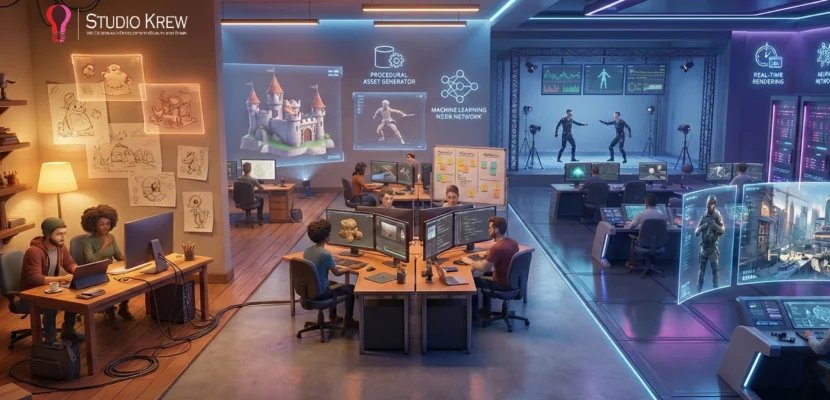
The global game industry has ranged from small independent titles to giant cinematic blockbusters, with a broad, ever-changing middle ground. In 2025, this range is more dynamic than ever. AI-driven workflows, new publishing economics, faster LiveOps demands, and cross-platform ecosystems have changed what it means to build an Indie, AA, or AAA game.
For new studios, these categories are more than just labels. They shape your budget, timeline, hiring, technology choices, and the audience you can reach. Knowing where you are and where you want to go has become one of the most important decisions a studio can make.
This article breaks down these differences. To really understand what’s at stake in 2025-26, we’ll look past textbook definitions and see how each category works in real production, strategy, and studio operations.
Why These Categories Still Matter in 2025-26
Every few years, someone in the industry claims that Indie, AA, and AAA classifications are outdated. Yet the reality is: publishers, investors, platforms, and even players still rely heavily on these mental models to set expectations.
In 2025-26, these categories influence:
How is your game funded?
Investors look at the expected category of a game before deciding whether they’re backing a creative experiment or a multi-year franchise.
How is your game marketed?
Indies live off authenticity and community traction; AAA thrives on blockbuster hype cycles; AA sits in a growing niche where both creativity and polish are expected.
How is your LiveOps pipeline planned?
A single-player indie may require occasional patches and QoL updates, while a AAA live-service title may need a 35-person LiveOps team running 365 days a year.
How your studio is perceived.
Studios often brand themselves around a category, shaping how publishers approach them and what talent they attract.
These categories frame the business reality behind the creative work.
What Indie, AA, and AAA Actually Mean Today
These categories aren’t just about size. They reflect a deeper philosophy: how a studio approaches making games.
Indie: The Creative Heartbeat of the Industry
2025’s indie scene is vibrant, diverse, and surprisingly powerful.
Indie teams today range from solo developers making narrative adventures to 10- to 20-person studios creating stylized platformers or survival games. Their strength isn’t big budgets, but originality, speed, and the freedom to break the rules.
The indie landscape thrives because of:
- accessible engines like Unity and Godot
- strong community-driven marketing cultures
- platforms that amplify small voices (Steam, itch.io, Switch, Game Pass deals)
- AI tools that level the playing field for small teams
Indies innovate where others hesitate, and experiment rather than merely optimize. They take risks that others only forecast.
This is why so many AA and AAA studios now scout indie titles for talent, ideas, and future acquisitions.
AA: The Space Where Craft Meets Commercial Viability
AA games used to fit neatly in the “mid-tier” bracket, but that’s changed. In 2025, AA games stand out by aiming for ambitious experiences with careful limits. While AAA projects go for huge scale and spectacle, AA titles focus on polished gameplay and storytelling with smaller budgets and less risk.
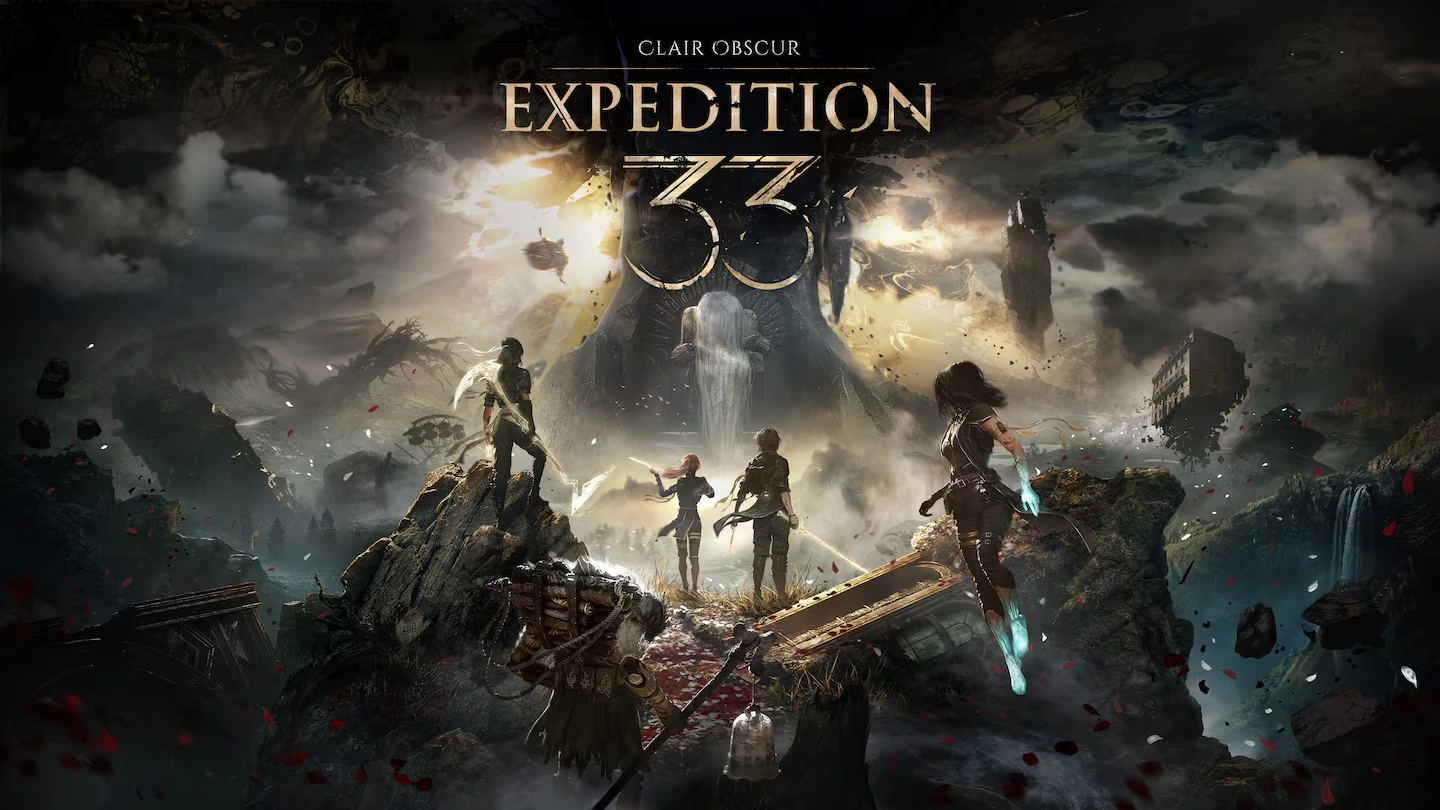
These are the games that offer:
- premium experiences
- respectable production quality
- cinematic ambition
- tighter scope
- memorable storytelling
…without the pressure of matching the spectacle of a $300M blockbuster.
AA studios aim for artistic ambition but make practical business choices. They avoid the huge complexity and marketing demands of AAA, skip feature creep and sprawling worlds, and focus on high quality within a manageable scope.
This category is also the fastest-growing segment. In 2024, Newzoo reported a 22% increase in AA production investments, largely because they deliver high-quality results with lower financial risk.
Games like Hellblade II, A Plague Tale: Requiem, and Remnant II prove that AA titles can compete for awards and cultural mindshare without spending a decade in development.
AA is increasingly becoming the “sweet spot” for new studios aiming for commercial success without AAA overhead.
AAA: The Blockbuster Machine That Defines the Mainstream
In 2025, AAA game development is both the peak and a paradox. It stands for the industry’s highest goals: stunning visuals, huge worlds, orchestral music, performance-captured characters, cross-media universes, and years of LiveOps support.
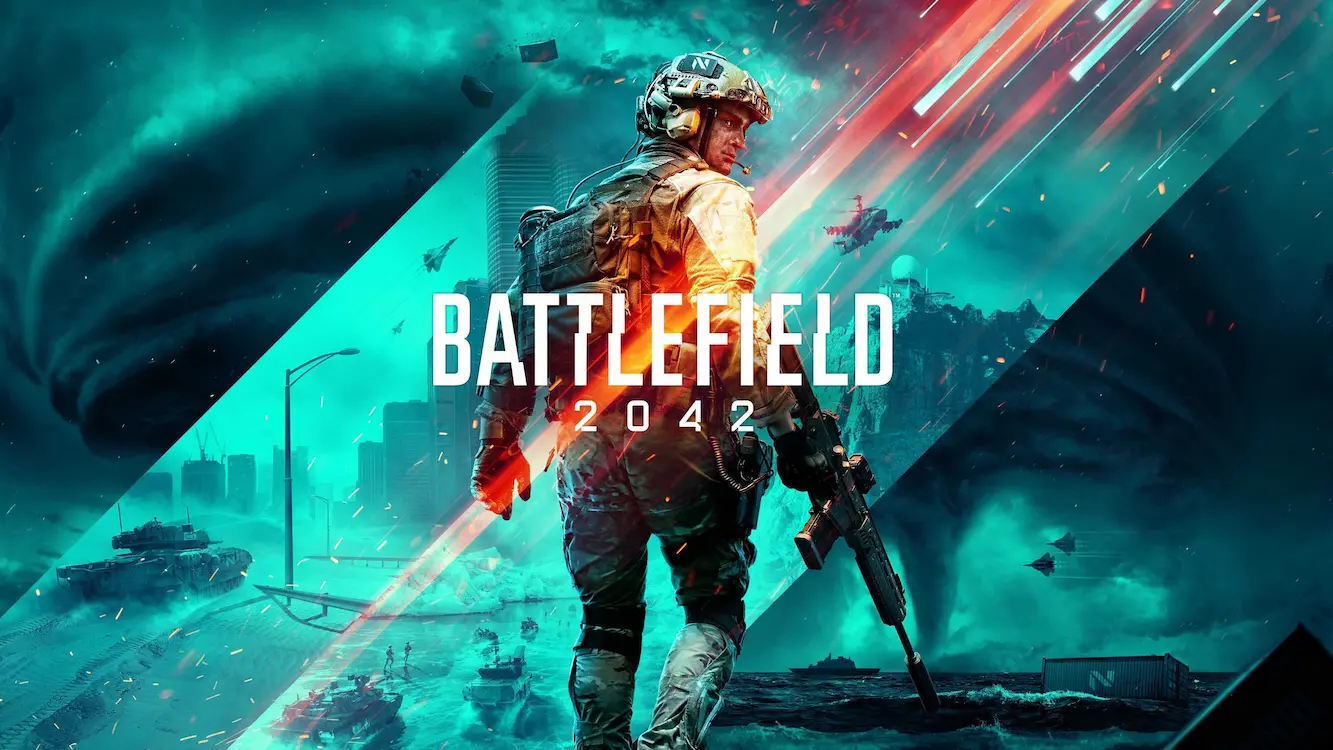
But it also represents:
- multi-year development cycles
- production budgets exceeding $150M–$650M
- global teams working across time zones
- enormous pressure to succeed financially
AAA studios don’t just make games; they build brands.
Franchises.
Transmedia ecosystems.
IP that must remain relevant for years, not months.
It’s a high-risk, high-reward world where perfection is expected and delays are common.
Yet despite the pressures, AAA remains the cultural touchpoint for millions of players worldwide. These are the games that define gaming generations.
The Budget Realities of 2025
In an era where even a strong indie production may require several million dollars, understanding financial expectations is crucial for any studio planning a new title.
- Indie productions generally range from $10,000 to $2 million, depending on art style, content depth, and platform scope.
- AA titles often span $1 million to $30 million, though some high-end AA teams have crossed the $40 million threshold.
- AAA games now commonly cost $50 million to $650 million, including development and global marketing.
A 2024 Newzoo analysis showed that AAA budgets have risen nearly 38% since 2020, reflecting both rising technical expectations and increasing dependence on long-term LiveOps support. Meanwhile, the AA space grew by 22% year over year as publishers began aggressively backing premium mid-market titles.
Budgets set the level of ambition, but they also determine how sustainable a project is.
Team Sizes & Production Pipelines: How These Worlds Work
Indie Teams: Agile, Passion-Driven, Multi-Hat Artists
Indie production depends on flexibility. Team members often wear many hats. A programmer might design levels, and an artist might handle UI and marketing. Decisions are made quickly, iteration is fast, and creativity is wide open.
But indie teams also face real challenges: limited resources, fewer QA cycles, and tough competition with high-production-value games.
AA Teams: Structured Creativity & Scalable Pipelines
AA studios are organized like AAA studios but with much less complexity. They have clear artistic direction, producers who create realistic plans, and tightly integrated QA. Outsourcing is used as a strategy, not just because it’s needed.
The result is a polished game that feels premium without being too large in scope.
Many new studios succeed in AA because the production culture is more sustainable.
AAA Teams: Industrial-Scale Production with Precision
AAA pipelines are massive operations involving specialized departments:
- Cinematics teams
- Rendering teams
- Motion capture specialists
- Engine programmers
- Multiplayer netcode engineers
- Narrative design departments
- LiveOps divisions
- Publishing & marketing arms
Production cycles can last 4–7 years, and the level of polish expected is unmatched.
AAA games are not just built; they are carefully engineered.
Marketing & Publishing: Where the Gaps Widen
If production is about how a game is made, marketing is about whether people will find it. In 2025, the biggest differences between Indie, AA, and AAA studios often show up in how games are introduced to players, not just in the games themselves.
The numbers alone illustrate the challenge. According to GameDiscoverCo’s 2024 report, more than 12,000 new games launched on Steam, yet over 70% generated less than $10,000 in their first year. Not because they were poorly made, but because they were poorly found. Visibility has become one of the most expensive currencies in the industry.
Indie developers, often working with minimal budgets, rely on community-driven discovery: development diaries, TikTok snippets, Discord engagement, YouTube devlogs, and steady Steam wishlist building. Their marketing is a conversation, not a campaign. Success comes from authenticity and timing, and many indies turn to external partners for support with trailers, store optimization, or launch strategy—areas where a well-timed boost can make or break momentum. Even when we support indie teams through technical co-development or guidance under our Game Development Services, positioning and narrative framing often come up in the conversation.
AA studios operate with a more hybrid approach. They typically collaborate with publishers or platform partners, enabling mid-level budgets for refined trailers, influencer collaborations, curated previews, and presence at global showcases like Gamescom or PAX. This category benefits the most from subscription platforms—Game Pass, PlayStation Plus, and Netflix Games—because their premium quality aligns perfectly with curated content libraries. A single platform partnership can put an AA title in front of millions at launch.
AAA, meanwhile, plays an entirely different game. Marketing becomes a multi-year machine—cinematic trailers, motion-capture promos, celebrity voiceovers, global PR tours, and meticulously calibrated reveal cycles. Insights from Newzoo show that AAA marketing budgets have grown nearly 30% in the past three years, with some campaigns now surpassing $100 million. In this tier, marketing is not just promotion; it is world-building. Every trailer beat, social activation, and seasonal LiveOps update is part of a long-term franchise ecosystem.
No matter the category, one thing is clear: marketing is now part of game development, not just an extra. With engines like Unity and Unreal making it easier to build great-looking games, the studios that succeed are the ones who communicate their vision best.
Unity’s versatility continues to influence launch strategies—see Unity Game Development Company.
The technical differences between Indie, AA, and AAA matter. But in 2025, the marketing differences often decide which games rise, which games survive, and which disappear into the algorithmic void.
LiveOps: The New Divide Reshaping Indie, AA & AAA Game Development
Once upon a time, a game “launched” and the story ended there. In 2025, launch day is merely the beginning of the relationship between a game and its players. What happens after launch—how often the game evolves, how it reacts to player behavior, how it maintains its community—now determines whether a game enjoys a long lifespan or disappears quietly in the noise.
This is where LiveOps becomes the great differentiator.
LiveOps isn’t just a feature. It’s a way of thinking. It’s the idea that games should keep growing and changing. In 2025, how Indie, AA, and AAA studios handle LiveOps shows just how much the industry’s expectations have shifted.
Drawing from the evolution we’ve outlined in StudioKrew’s articles on
🔗 What Is an AAA Game? Inside the World of Blockbuster Game Development
🔗 What Is LiveOps in Game Development?
…we can see that LiveOps has become one of the clearest boundaries separating the categories—sometimes more than budget or visuals.
Let’s explore how each tier handles LiveOps today.
Indie LiveOps: Minimal, Experimental, Community-Led
For indie studios, LiveOps is often a blend of passion and practicality. Most small teams cannot sustain weekly events, ongoing balancing cycles, or ever-expanding content. But they can nurture a loyal player community by:
- releasing thoughtful updates
- fixing bugs quickly
- adding occasional new areas, items, or story beats
- introducing seasonal events when resources allow
- engaging deeply with players on Steam, Discord, or Reddit
Many indie LiveOps setups rely on transparency, like sharing roadmaps, devlogs, and honest updates, instead of constant new content. The connection between players and developers often feels personal.
But the real tension is this: the more successful an indie game becomes, the more LiveOps it needs, which can quickly overwhelm a small studio. This phenomenon is so common that some indies now outsource LiveOps support or move into AA budgets to expand their operational team.
In 2025, LiveOps had become the silent force pulling successful indies into the AA category almost unintentionally.
AA LiveOps: Structured, Data-Informed, Incrementally Scalable
If indie LiveOps is improvisational jazz, AA LiveOps is a carefully conducted orchestra.
AA studios do not operate at the AAA scale, but they must competently compete for player attention—and that requires a predictable, data-driven LiveOps pipeline that includes:
- weekly or monthly content updates
- new quests, modes, or seasonal activities
- cross-platform balancing
- marketplace tuning
- limited-time events to boost retention
- telemetry dashboards for player behavior insights
For many AA studios, LiveOps becomes a “second team,” sometimes as big as the main development team. Having both a Core Game Team and a LiveOps Team is now common for AA games in genres like survival crafting, action RPGs, co-op shooters, and social multiplayer.
The crucial difference is scalability.
AA studios often build LiveOps pipelines that can expand or contract based on player engagement. This makes the AA space uniquely adaptive, and in many ways, the healthiest segment of the industry for long-term sustainability.
Unlike AAA, AA studios aren’t trapped in LiveOps machinery that requires constant blockbuster-sized updates.
Unlike indies, they have enough resources to deliver meaningful updates consistently.
This is why so many successful 2025 breakout hits—Palworld, Remnant II, Enshrouded—live comfortably in the enhanced AA LiveOps model.
AAA LiveOps: Industrial-Scale Content, Predictive Analytics, 24/7 Operations
If indies view LiveOps as community care, and AA sees it as a strategic growth engine, AAA studios treat LiveOps as a full-fledged business division—sometimes larger than the original development team.
From the moment a AAA game launches, LiveOps becomes a high-intensity, data-rich, globally orchestrated pipeline. We’re talking about:
- content seasons planned 12–18 months in advance
- Battle passes were designed months before launch.
- predictive player segmentation
- multi-country server clusters
- holiday events synchronized across time zones
- cinematic cutscenes built solely for LiveOps rollouts
- narrative arcs woven into seasonal gameplay updates
- machine learning models forecasting churn and retention
AAA LiveOps is a world of its own.
A major AAA title may employ:
- 20–50 designers
- 15–30 live QA testers
- full-time analytics teams
- server engineers
- event designers
- monetization strategists
- pipeline engineers
- marketing teams for LiveOps-only campaigns
A single seasonal event for an AAA game can take as much planning as the entire content pipeline of a mid-sized indie production.
This scale is both exhausting and expensive, but it’s also what keeps games like Fortnite, Genshin Impact, Apex Legends, Call of Duty, and Destiny 2 going for years.
LiveOps is not just maintaining the game.
It maintains the ecosystem.
It maintains the revenue cycle.
It maintains the IP’s cultural relevance.
AAA LiveOps is the reason big games no longer “launch and finish”—they “launch and evolve.”
LiveOps as the True Divider Between the Categories
In many ways, LiveOps has become the new standard for measuring production maturity.
Budgets can overlap.
Visual quality can overlap.
Engines can overlap.
But LiveOps?
LiveOps reveals the truth about a studio’s infrastructure.
Indie → offers heart and responsiveness.
AA → offers structure and consistency.
AAA → offers scale and continuity.
LiveOps is where a studio proves whether it is building a game or building an ongoing world.
That’s why, in our StudioKrew AAA and LiveOps blogs, we focus on future-proof LiveOps frameworks, analytics-driven design, and modular pipelines that can grow with any studio, whether indie or enterprise.
How StudioKrew Strengthens LiveOps for Every Studio Tier
Having worked across diverse categories, StudioKrew deeply understands that LiveOps is not a “feature”—it’s a strategy.
So our LiveOps support evolves based on the client’s tier:
For Indie Teams
We help indies maintain momentum without burning out.
Lightweight event systems, automated analytics, simplified patch pipelines, and sustainable update cadences.
For AA Studios
We establish scalable pipelines—modular event systems, in-game economies, seasonal content flows, and analytics dashboards that grow with player demand.
For AAA Studios
We integrate specialized tech:
- Live event orchestration
- AI-driven balancing
- server load optimization
- predictive retention modeling
- cross-platform seasonal pipelines
- integration with marketing + publishing teams
Our goal is not to just “run LiveOps.”
Our goal is to make LiveOps future-proof so games can succeed for years.
Tech Stacks in 2026: The Foundations of Modern Production
If budgets, teams, and LiveOps define the operational realities of Indie, AA, and AAA studios, then the technology stack defines the creative possibilities.
In 2025, choosing an engine is more than a technical decision; it’s a statement about your studio’s identity. Engines now affect how quickly teams can work, how easily they can grow, how efficiently they build content, and how widely their games can be released.
Every studio, from the smallest indie duo to the largest AAA publisher, eventually faces the same foundational question:
“What are we building on—and what does that choice commit us to?”
In a rapidly evolving ecosystem, three major approaches drive most of game development: Unity, Unreal Engine, and custom proprietary engines. Each comes with its own strengths, limitations, cultural expectations, and long-term implications for the studio.
Unity: The Engine of Flexibility, Speed, and Multi-Platform Reach
Unity remains one of the most widely adopted engines in the world—not because it aims to compete with Unreal’s cinematic fidelity, but because it empowers teams to build quickly, iterate constantly, and deploy everywhere.
In the Indie and AA landscape, this advantage is invaluable.
Unity handles:
- mobile-first productions
- cross-platform games
- 2D and stylized 3D titles
- hybrid-casual and mid-core mobile genres
- rapid prototyping cycles
- AR and VR experiences
It’s become the go-to engine for teams who want to work quickly without giving up quality.
A small studio using Unity can prototype in days, push a vertical slice in weeks, and launch on multiple platforms without rewriting the core pipeline. That speed is why Unity remains the backbone of countless indie hits and why AA studios with stylized art direction or mobile-first ambitions continue to rely on it.
For studios looking to blend creativity with efficiency, Unity offers a mature ecosystem, thousands of ready-to-integrate tools, and a production workflow that grows with the studio rather than constraining it.
StudioKrew’s own Unity expertise reflects this reality – our work often revolves around helping teams build stable architectures, multiplayer foundations, and scalable systems that allow games to evolve well past launch.
(Explore Unity capabilities here: https://studiokrew.com/unity-game-development-company)
Unity’s identity in 2025 remains clear: it is the engine for teams who value iteration speed, versatility, and cross-platform agility.
Unreal Engine 5: The Cinematic Powerhouse Redefining AA & AAA Production
If Unity is the engine of flexibility, Unreal Engine 5 is the engine of ambition.
Nothing else on the market matches UE5’s ability to produce cinematic, high-end visual experiences with such elegance. Nanite, Lumen, MetaHuman, World Partition, and Chaos Physics have collectively raised the bar for what new studios expect from an engine.
Unreal has become the default engine for:
- high-end AA productions
- AAA open worlds
- next-gen shooters
- narrative-heavy adventures
- cinematic games
- large-scale multiplayer
- photorealistic experiences
What’s particularly transformative is how UE5 now enables smaller teams to achieve what once required entire departments. A 30-person AA team can create visuals that rival those of early AAA titles because the engine handles much of the complexity under the hood.
This democratization has led to a modern AA “renaissance,” where great visuals meet practical budgets. It’s also raised the bar for what players expect from premium PC and console games.
StudioKrew’s Unreal practice leans into this evolution. Whether it’s multiplayer netcode, high-fidelity art pipelines, large environment builds, or cinematic production flows, our Unreal team operates with workflows designed for modern AA and AAA demands.
(Explore Unreal capabilities here: https://studiokrew.com/unreal-engine-game-development-company)
In short, Unreal Engine 5 shapes studios that want to feel like AAA—even when they’re not AAA yet.
Custom Engines: Rare, Expensive, and Purpose-Built for Franchises
The third option, custom proprietary engines, has become rare but is still essential for some large-scale productions. These engines are mostly used by companies building long-term franchises, where deep optimization and specialized workflows make the cost worthwhile.
Custom engines allow:
- complete control over rendering pipelines
- hardware-level optimization
- unique simulation systems
- engine-side tools not available elsewhere
- long-term evolution across multiple titles
But they come with enormous commitments:
full-time engine teams, custom editors, bespoke tools, documentation, onboarding overhead, and ongoing R&D investment.
This path makes sense only for studios generating multi-title AAA franchises—Capcom’s RE Engine, Guerrilla’s Decima, Ubisoft’s Snowdrop, and Rockstar’s RAGE engine being prime examples.
For Indie and AA studios, the opportunity cost is simply too high. Unreal and Unity evolve so rapidly that reinventing the wheel rarely makes strategic sense.
Engine Choice Shapes Studio Identity
By 2025, engine choice is no longer a matter of preference. It is a declaration of intent.
- Unity studios tend to prioritize agility, cross-platform reach, mobile markets, and stylized design languages.
- Unreal Studios embraces cinematic ambition, console-first design, rich world-building, and advanced physics-driven gameplay.
- Custom engine studios commit to long-term R&D and decades-long franchise development.
Choosing an engine means choosing a philosophy.
Choosing a philosophy leads to choosing a category.
And choosing a category shapes how a studio grows for years to come.
AI, Procedural Pipelines & The New Studio Boundaries
Perhaps the most significant shift in recent years is the rise of AI-assisted development and AI-integrated game development.
Tasks that used to take weeks, such as concept variations, environment blocking, animation cleanup, and shader optimization, can now often be completed in days. AI copilots, generative tools, procedural level design, and predictive balancing are blurring the old lines between Indie, AA, and AAA.
Indie teams suddenly have access to pipelines that previously required dozens of specialists.
AA studios can accelerate content production without inflating team size.
AAA studios can reduce certain costs while increasing production ambition.
A 2025 Unity report suggests that AI-assisted workflows reduce production time for small and mid-sized teams by 25–40%, allowing them to compete in spaces once considered out of reach.
Yet, AI doesn’t eliminate the categories—it redefines what is possible within each.
Which Category Should Emerging Studios Target?
Every new game studio eventually faces a key decision—a point where ambition meets reality and creative dreams must fit with production logistics. This isn’t just about budgeting. It’s a long-term commitment to a way of working, a target audience, and a sustainable business model.
The question isn’t “What kind of game do we want to make?”
The real question is:
“What kind of studio do we want to become?”
In 2025, this choice has become even more critical because the market has grown more polarized: blockbuster AAA titles continue to dominate the charts, while indie hits disrupt expectations with creativity and charm. Meanwhile, the AA category—long considered the “middle class” of gaming—has re-emerged as one of the healthiest, most profitable spaces for new studios to grow.
To decide where your studio should aim, let’s break down the strategic considerations.
Why Many Emerging Studios Start With Indie (and Why Some Shouldn’t)
Indie development traditionally attracts teams who prioritize creative freedom and manageable production scope. With tools like Unity, Unreal, and AI-assisted pipelines, small teams can now build polished prototypes, vertical slices, or even complete games without the need for publisher-scale budgets.
But here’s the reality:
The indie market is brutally competitive.
According to Steam’s 2024 year-end analysis, over 14,000 new games were released on the platform, with only 7–8% surpassing $100,000 in revenue.
This doesn’t mean the indie path is a dead end. It just means new studios need to approach it with a clear strategy.
A new studio might choose the indie path if:
- they want to validate an idea quickly
- they want freedom from publisher pressure
- they have a small core team
- they want to build a community-first brand
- they plan to later scale into AA with investor interest
Many of the strongest AA studios in 2025 started as indie teams that figured out how to attract players, build traction, and demonstrate reliable execution before scaling up.
Teams pursuing this route often rely on strong technical partners for prototyping and engineering support, especially if they lack senior developers capable of architecting production pipelines.
StudioKrew frequently supports such teams through technical co-development, multiplayer setup, and MVP prototyping for games.
The Rise of AA: The Best Starting Category for Most New Studios
Analysts often call AA the “Goldilocks zone” of game development. It’s where ambition meets practicality, and production scope aligns with sustainable revenue.
Industry data from Newzoo and GameDiscoverCo highlights that:
- AA games have seen 22% YoY growth in investment interest (2023–2024).
- AA titles generate higher average revenue per title than indie games by an estimated 4.4x.
- Subscription platforms (Game Pass, PS Plus) heavily favor AA titles due to their premium polish and mid-range budgets.
For new studios entering the industry in 2025 or 2026, AA offers something unique:
- Creative control without AAA pressure
- Premium experience without franchise-level burn rates
- Publisher-friendly scope
- Manageable team sizes (40–120 people)
- Predictable LiveOps cycles
- Higher odds of recouping investment
And maybe most importantly,
AA is where Unreal Engine 5, Unity HDRP/URP, and AI-level workflows have truly democratized quality.
With the right talent and production pipeline, a new studio can produce AA-level fidelity without requiring a 300-person team or a multi-year R&D budget.
Studios that come to StudioKrew for Unreal co-development, multiplayer engineering, or console optimization often fall into this category—they’re not AAA, but they’re building something with premium ambition that requires a partner capable of elevating their technical foundations.
This is where our Unreal Engine Game Development services align with modern AA studios aiming for mid- to high-tier production value.
AAA: The Destination for a Few, Not the Starting Point for Most
Every new studio dreams of building worlds that look like GTA VI, Horizon Forbidden West, or Final Fantasy XVI. But AAA is not a destination you stumble into—it is a long-term commitment requiring:
- deep financial backing
- multi-year pipelines
- hundreds of developers
- extremely specialized roles
- advanced LiveOps infrastructure
- multi-studio collaboration
- massive marketing support
The average all-in cost of a major AAA release (including LiveOps and global marketing) in 2024–2025 ranges between $180M and $650M. Only a small number of studios worldwide can sustain that level of investment across multiple project cycles.
AAA is possible for new studios, but not as a first step. Almost every AAA studio today began as an indie or AA team that gradually built up its technology, culture, pipelines, and publisher trust.
AAA should be viewed not as a launch category, but as a future identity that a studio grows into.
So Which One Should You Choose? The Practical Framework
Here’s something industry veterans rarely say out loud:
Most emerging studios should aim for AA, even if they begin with indie production realities.
Why?
- It’s fundable.
- It’s marketable.
- It’s feasible with 25–50 core team members.
- It’s attractive for platform deals and subscriptions.
- It’s manageable even without billion-dollar budgets.
- It aligns perfectly with modern tools (Unity HDRP, UE5, AI-integrated pipelines).
Indie proves your vision.
AA proves your studio.
AAA proves your legacy.
The smartest studios in 2025 see these categories not as barriers, but as stages of growth, each building momentum for the next.
How StudioKrew Helps Teams Across All Categories
One of the biggest lessons we’ve learned from working with studios worldwide is that Indie, AA, and AAA teams don’t differ in ambition; they differ in infrastructure. Every studio wants to make memorable, high-performing games. What they often need is the right mix of technical support, production discipline, and scalable systems to match their vision.
At StudioKrew, our role shifts depending on a team’s stage and category. We don’t impose a rigid process; we join the studio where they are and help them build toward where they want to go.
Supporting Indie Teams: From Prototype to a Playable Vision
Indie creators usually come to us with something precious—an idea that is raw, experimental, and full of potential. What they often lack is time, bandwidth, or senior engineering support to translate that idea into a stable prototype or early vertical slice.
Our indie collaborations focus on:
- rapid prototyping
- Unity and Unreal setup
- performance optimization
- scalable architecture
- art and animation support
- lightweight LiveOps foundations
Indie teams often lean on our rapid prototyping and cross-platform engineering expertise, especially when preparing a pitch build or an early Steam demo. This helps them enter the market or investor meetings with confidence without burning months on technical groundwork.
(See StudioKrew’s broader capabilities here: https://studiokrew.com/game-development)
Empowering AA Studios: Scaling Ambition Without Overextending Resources
AA studios sit in a uniquely demanding middle ground—they want to deliver premium quality while working within realistic budgets and sustainable team sizes. Many of these teams rely on StudioKrew to expand their capabilities without inflating headcount.
For AA productions, we help with:
- end-to-end co-development
- Unreal Engine engineering for PC/console
- multiplayer systems (Photon Fusion, Unreal replication)
- environment and character art pipelines
- cinematic development
- technical architecture for long-term scalability
This is also where our Unreal development services are especially valuable. Many AA teams aim for “near-AAA polish” with UE5, and our engineering and art teams work smoothly with their pipelines to help them reach that level without missing deadlines.
AA studios often see us as their “extended team,” providing a reliable technical and artistic backbone. This lets them expand scope, add features, or polish key systems without risking production burnout.
Strengthening AAA Teams: Deep Technical Expertise and Enterprise-Level Scalability
AAA productions come with their own ecosystem of complexity—high-performance rendering, cross-platform builds, multiplayer infrastructure, massive content pipelines, and 24/7 LiveOps expectations. And while AAA game development studios have large internal teams, they still rely heavily on trusted partners to deliver specialized components of the game.
For AAA teams, our work involves:
- high-volume 3D environment and character production
- advanced gameplay engineering
- AI-assisted pipeline creation
- LiveOps systems, analytics, and event orchestration
- multiplayer architecture and backend simulation
- optimization for PS5, Xbox Series X/S, Switch, and PC
At this scale, our value is not just in execution but in taking ownership. AAA studios rely on partners who can join multi-team pipelines, follow enterprise workflows, maintain documentation standards, and deliver consistently across long development cycles.
Whether we’re building systems for a next-gen console release or supporting seasonal LiveOps content, our collaboration model aligns with the rigorous demands of AAA production.
When evaluating a game development company for your project, understanding the difference between indie, AA, and AAA production scales helps you match the right studio to your budget and goals.
A Partner That Grows With Your Studio
Some teams come to StudioKrew at the beginning of their journey; others join us once they’ve already shipped successful titles. But the throughline is always the same:
We help studios grow into the identity they want—Indie, AA, or AAA—by strengthening the technical and creative foundations needed for modern game development.

Whether it’s an early prototype, a mid-market premium title, or a franchise-level AAA world, StudioKrew’s role is to bring stability, expertise, and long-term thinking to a studio’s vision.
Closing Thoughts
The labels Indie, AA, and AAA still shape the industry—not as strict boxes, but as strategic frameworks that guide how games are imagined, made, marketed, and supported. In 2025, these categories are changing faster than ever, driven by technology, player expectations, and new economic forces.
For new studios entering the market, clarity matters. Understanding the realities of each category—its opportunities, challenges, and production culture—can be the difference between a studio that thrives and a studio that burns out under misaligned expectations.
No matter which category a team identifies with, the future belongs to studios that adapt early, build smartly, and collaborate intentionally.
StudioKrew is committed to supporting that future, whether you’re building your first indie prototype or growing into a multi-year AAA franchise.






 INDIA
INDIA CANADA
 USA
USA UAE
UAE